Big Screen or Nothing: The Directors Who Are Still Fighting for the Theater Experience
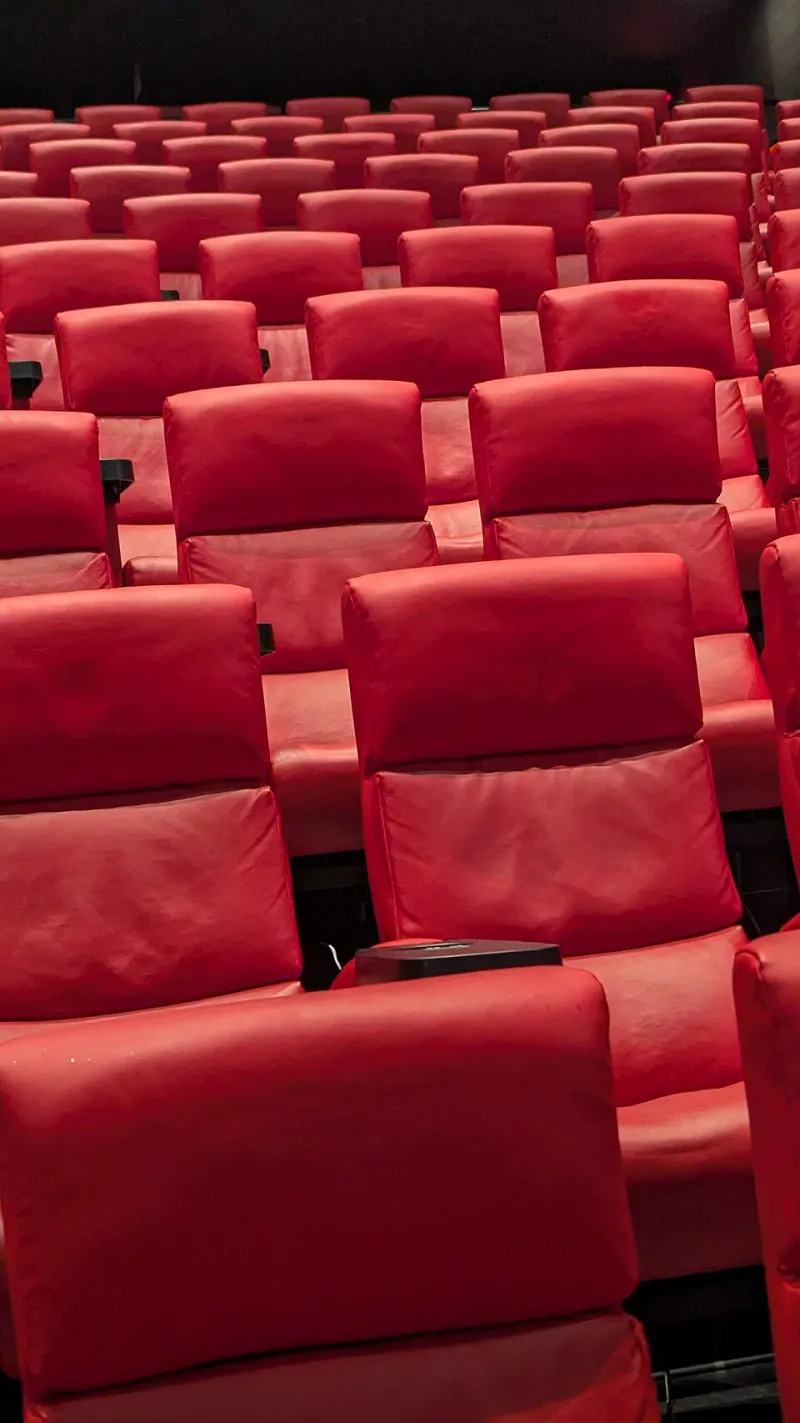
Photo: Eden, Janine and Jim from New York City, CC BY 2.0, via Wikimedia Commons
There's a moment in a proper movie theater — the lights go all the way down, the screen fills with something enormous, and for the next two hours the outside world completely stops existing — that no living room setup has ever truly replicated. A handful of working filmmakers know this, believe it in their bones, and have built entire careers around protecting it.
In an era where studios are increasingly comfortable sending films straight to streaming platforms, where day-and-date releases have become normalized, and where the definition of a "movie" has blurred into something that might just as easily live on your phone, these directors are doing something that looks increasingly radical: insisting that their work be seen in a theater first, loudest, and best.
The Holdouts and Why They Matter
Christopher Nolan is the most obvious name in this conversation, and he's earned that position through both box office results and a very public, very consistent philosophy. The man refused to shoot digitally for most of his career. He's filmed sequences in IMAX that essentially require a massive screen to be fully experienced. And when Warner Bros. announced that Tenet would get a simultaneous streaming release during the pandemic, Nolan's frustration was loud enough to reportedly influence his decision to leave the studio entirely.
His subsequent move to Universal for Oppenheimer wasn't just a business decision — it was a statement. And Oppenheimer went on to gross over $950 million worldwide while becoming a genuine cultural event, the kind of shared theatrical experience that people dressed up for, debated, and talked about for months. Nolan didn't just win the argument; he won it spectacularly.
David Fincher operates differently but with equal conviction. His films — meticulous, cold, visually precise — are constructed with a specific viewing experience in mind. Even when he's made content for Netflix (Mank, The Killer), there's a sense that he's importing theatrical filmmaking sensibility into a streaming context rather than adapting his approach to suit the platform. The aspect ratios are deliberate. The sound design demands a proper audio setup. He's not making TV, even when the TV is technically how you're watching it.
The Aspect Ratio Wars (Yes, This Is a Real Thing)
If you want to understand how seriously some filmmakers take the theatrical experience, spend five minutes reading about aspect ratios. It sounds deeply technical and kind of nerdy — because it is — but it's also one of the clearest expressions of directorial intent in modern cinema.
When a director chooses to shoot in a specific format, they're making a decision about how the human eye will move across the frame, what information gets included or excluded, and how the image will feel emotionally. Nolan's IMAX sequences expand to fill a massive screen in ways that streaming compression and standard TVs simply can't honor. When you watch those scenes at home, you're watching an approximation.
Denis Villeneuve has been equally vocal about this. The Dune films were built for massive screens, and Villeneuve made clear that he considered streaming the lesser option for experiencing them. He's been open about his concerns that cinema as a theatrical art form is under genuine threat, and his choices — epic scale, immersive sound design, images that reward size — are a form of advocacy as much as aesthetics.
Is This Elitism in Disguise?
Here's the uncomfortable question that has to be asked: when a director insists their film can only be properly experienced in a movie theater, are they being artistically principled or are they being exclusionary?
Movie tickets aren't cheap. A night out at the multiplex for a family of four in a major American city can easily run $80 or more before you've touched the concession stand. Not everyone lives near an IMAX screen. Accessibility matters, and the streaming revolution — whatever its artistic costs — genuinely democratized access to cinema in ways that benefited a lot of people who were previously priced out or geographically excluded.
There's a real tension here that the theatrical purists don't always acknowledge. Championing the big-screen experience is easier when you're Christopher Nolan and your films have guaranteed wide releases at thousands of screens across the country. For smaller independent filmmakers, streaming has been a lifeline, a distribution channel that didn't exist before and that gets their work in front of audiences who would never have found it otherwise.
So maybe the answer isn't that theatrical cinema is inherently better, but that certain films — films built for scale, for immersion, for the specific psychological effect of a darkened room full of strangers — genuinely lose something essential when they migrate to a home screen. That's a distinction worth making.
The Legacy Question
Here's what's interesting about the directors who've held the theatrical line: their films tend to have longer cultural legs. Interstellar came out over a decade ago and is still regularly cited as a formative moviegoing experience by younger viewers who saw it as kids. People talk about where they were when they saw it, who they were with, what it felt like in that auditorium. That's the kind of cultural imprint that a streaming release rarely generates.
Box office numbers matter too, and the theatrical holdouts have generally proven their case commercially. The films that demand the big screen tend to reward audiences who show up for them, generating the kind of word-of-mouth enthusiasm that builds opening weekends into sustained runs. Oppenheimer was still selling tickets weeks after its release. That doesn't happen with a Netflix drop.
There's also a practical argument about the economics of filmmaking itself. When theatrical releases perform, they generate the kind of revenue and cultural cachet that gives directors leverage to make their next ambitious project. The theatrical experience isn't just about aesthetics — it's about sustaining the conditions under which ambitious, expensive, non-franchise filmmaking can continue to exist.
What This Means for the Rest of Us
For regular moviegoers, the directors who refuse to make streaming movies are doing something kind of generous, even if it doesn't always feel that way. They're betting on the audience. They're saying that the communal experience of watching something together in the dark is worth preserving, worth paying for, worth the inconvenience of leaving the house.
At Flim4U, we're not here to tell you that watching a movie on your couch is wrong — your screen, your story, your call. But there's something worth honoring in filmmakers who still believe that cinema is a place as much as it is a thing, and who keep making movies that prove it.
The theater isn't dead. Not while directors like these keep insisting it isn't.