Ninety Minutes, No Filler: The Case for Cinema's Most Underrated Format
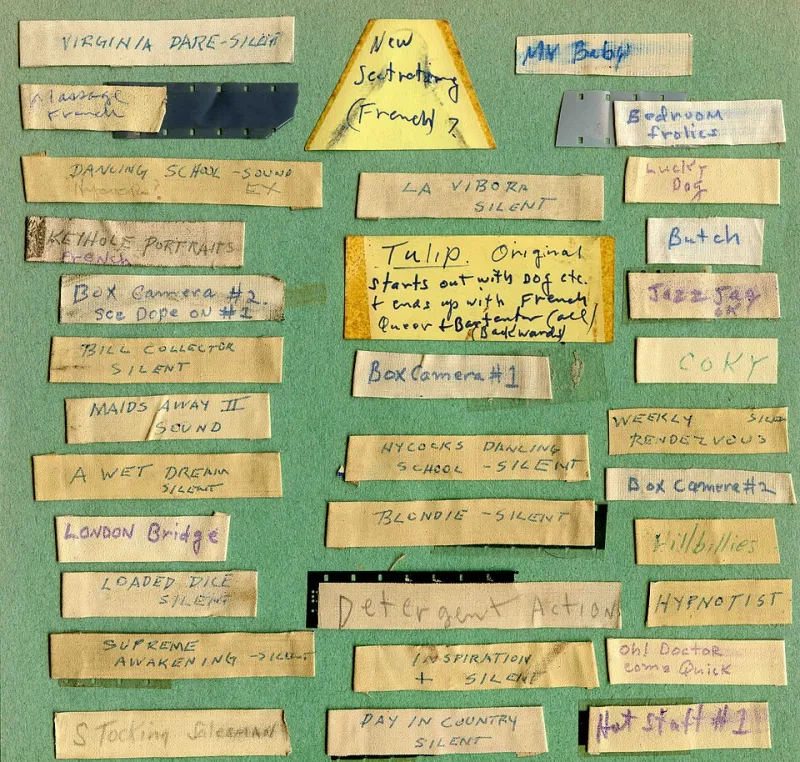
Photo: Danielteolijr, CC BY-SA 4.0, via Wikimedia Commons
Somewhere along the way, we agreed that important movies have to be long. Three hours for the superhero finale. Three and a half for the mob epic. Nearly four if the director's cut hits Max. Meanwhile, one of cinema's most satisfying formats — the sub-90-minute feature — keeps doing its job in relative obscurity.
Let me be clear about what I'm praising here. I'm not talking about short films, the festival deep cuts that run fifteen minutes. I mean complete features: real stories, real arcs, credits that roll before your legs fall asleep. Films that say what they came to say and then get out of the way.
The Economics of Brevity
There's a reason these films exist, and it's not laziness. A tight runtime forces discipline. Every scene has to earn its place because there's no room for the detour, the extra subplot, the third act that should've been the second. Watching a great 85-minute movie is like watching a gymnast stick a landing — you can feel the precision.
And audiences are hungrier for this than the industry admits. The backlash to bloated runtimes has been building for years, and streaming has quietly become the natural habitat of the short feature. Freed from the pressure of justifying a $20 theater ticket, these films find their people on demand.
Ten Short Features Worth Your Evening
Here's a starter menu, nearly all streaming or rentable in the US right now:
- Before Sunset (2004) — Technically 80 minutes, and arguably the best film about adult conversation ever made. Richard Linklater shot it tight because the story is the clock ticking.
- The Trouble with Harry (1955) — Yes, Alfred Hitchcock made a 99-minute corpse comedy, but his Rope and others hover near the mark. Even the masters worked lean.
- Coraline (2009) — 100 minutes, but Laika's stop-motion marvel moves like something half that length. Close enough to make the point: fantasy doesn't need to be exhausting.
- Freaks (1932) — Tod Browning's notorious carnival classic runs barely 64 minutes and packs more genuine unease than most modern horror franchises manage across six films.
- Paths of Glory (1957) — Kubrick's anti-war masterpiece, 88 minutes, zero wasted frames. Proof that a war film can be devastating without a battlefield epic's length.
- Sleeping Beauty (1959) — Disney at its most economical. Seventy-five minutes, and the animation still outclasses most of what followed.
- The Phantom Carriage (1921) — Victor Sjöström's silent ghost story, roughly 100 minutes, and the direct ancestor of every haunted-Past image you've seen since.
- Bill & Ted's Excellent Adventure (1989) — Eighty-six minutes of pure joy. Comedy thrives on brevity; the joke that runs long dies.
- A Quiet Place: Day One prequels aside, try Wait Until Dark (1967) — Terence Young's home-invasion thriller with Audrey Hepburn, 108 minutes but shot like a coiled spring. Forgive the stretch — the tension-per-minute ratio is elite.
- Any Given entry from the Before trilogy's cousins: Certified Copy-era Kiarostami, or simpler: Airplane! (1980) — Eighty-eight minutes, roughly 400 jokes. The most quoted American comedy ever was made by people who respected your time.
The Quiet Comeback
Here's the hopeful part: the short feature is creeping back. A24 and Neon keep releasing lean dramas. Horror, the genre most friendly to low budgets and high concepts, has essentially adopted the 90-minute template as its house style. And streaming platforms, hungry for completion rates, are discovering what vaudeville knew a century ago — people love an act that ends before they want it to.
The three-hour epic isn't going anywhere, and honestly, when it works (The Godfather isn't getting shorter), it earns every minute. But the next time you're staring down a 165-minute runtime and feeling your enthusiasm drain, remember there's another aisle in the store.
Ninety minutes. One story. No filler. Sometimes the miracle is what a filmmaker leaves out.