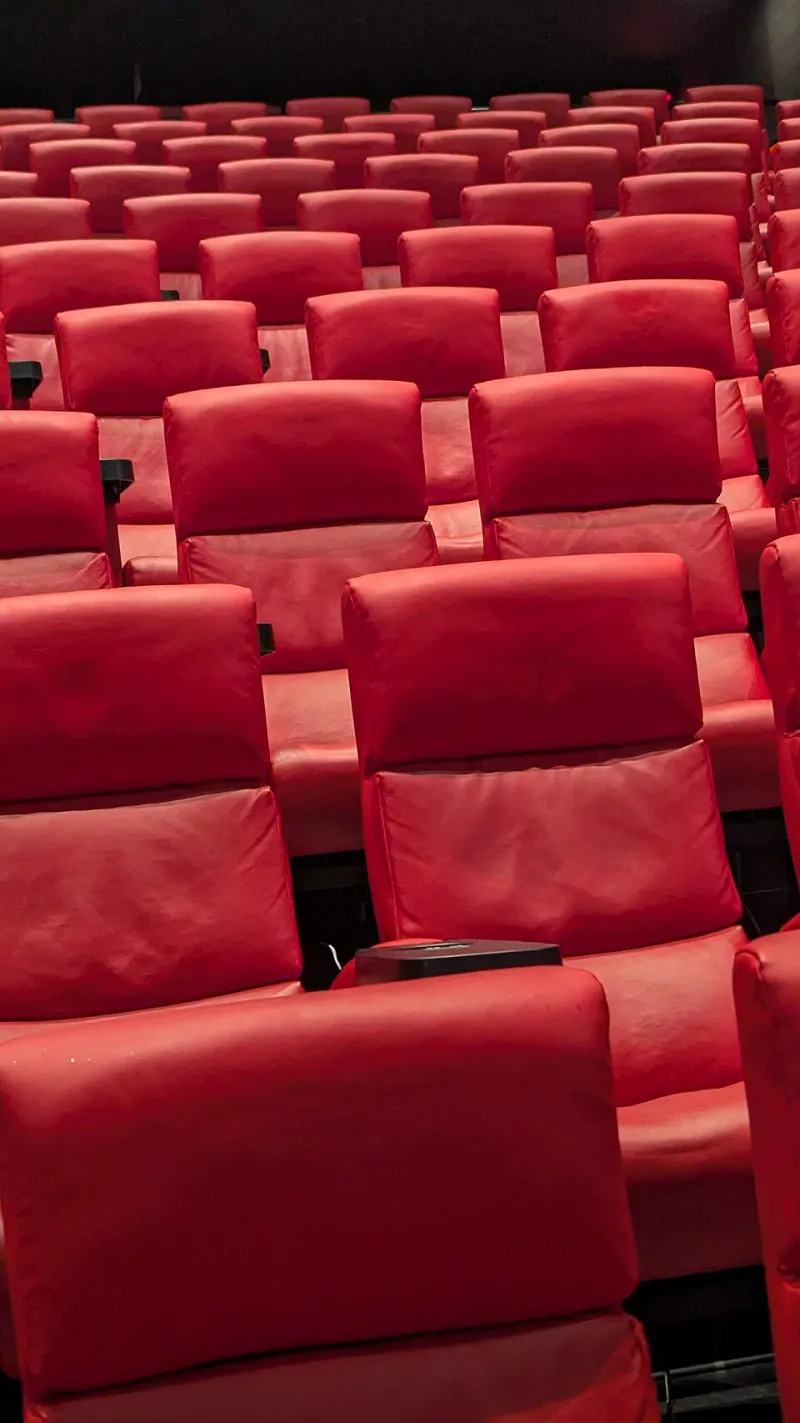
Studios Keep Remaking Movies You Already Liked — And Somehow That's Our Fault Too
Photo: No attribution, CC0, via Wikimedia Commons
There's a particular kind of frustration that hits when you see a new trailer drop and realize — with a slow, creeping dread — that you've already seen this movie. Not a sequel, not a spin-off, but a beat-for-beat remake of something that came out maybe fifteen years ago and worked just fine the first time. You scroll through the comments. Everyone's annoyed. And then, three months later, the thing makes $200 million.
This is the remake paradox, and it's more complicated than it looks.
The Math That Drives the Machine
Here's the thing studios will tell you, quietly, over coffee: original films are terrifying. Not creatively terrifying — financially terrifying. When a studio greenlights an unknown property, they're essentially betting hundreds of millions of dollars on a brand nobody's heard of. That's a hard sell to shareholders, to theater chains, to the marketing teams who need something recognizable to build a campaign around.
Remakes solve that problem in a very specific way. They come with built-in name recognition, existing fan bases, and decades of cultural goodwill that a marketing team can exploit without spending an extra dime. According to data from The Numbers, the top-grossing remakes of the last decade have consistently outperformed comparable original films at the domestic box office — not because they're better movies, but because audiences already know how to feel about them before they buy a ticket.
Studio logic, simplified: a familiar title reduces the perceived risk for the average moviegoer. And reducing perceived risk is basically the entire business model right now.
Why Recent Films Get Remade While Older Ones Collect Dust
Here's where things get genuinely strange. If remakes are about nostalgia and name recognition, you'd expect Hollywood to be mining the rich, underexplored vein of classic cinema — the forgotten noirs, the mid-century science fiction B-movies, the international films that never got a proper American release. There's decades of brilliant, untapped source material sitting right there.
Instead, we get remakes of films from 2002. Or 1994. Or — and this is where it gets existential — 2010.
The reason, industry insiders will tell you, comes down to intellectual property ownership and the age of the target demographic. Studios are acutely aware that their core audience skews toward 18-to-34-year-olds, and that demographic's nostalgia cycle is shorter than previous generations. The films that hit hardest for a 28-year-old today aren't classic Hollywood — they're the movies that played at the multiplex during their childhood. Studios are essentially farming the nostalgia of millennials and older Gen Z viewers, which means the remake pipeline will keep drifting forward in time as those audiences age.
Older properties also carry complicated rights situations, outdated cultural contexts, and audience unfamiliarity that requires expensive marketing to overcome. A remake of a 1960s Western needs to explain what it is. A remake of a late-90s action film basically markets itself.
What Audiences Actually Want (It's Complicated)
Here's the uncomfortable part. Survey data consistently shows that audiences claim to want original content. Polls, focus groups, social media sentiment — all of it points toward a public that's hungry for new stories, new characters, new worlds. And yet, box office numbers tell a different story. Original films routinely underperform against franchise entries and remakes, even when critics love them.
This gap between stated preference and actual behavior is something behavioral economists call the intention-action gap, and it's Hollywood's favorite excuse. Studios aren't entirely wrong to point at it. Audiences say they want originality, but they also choose familiarity when they're deciding how to spend a Friday night and $15 on a ticket.
The nuance that gets lost in this conversation is that audiences aren't a monolith. There's a significant portion of the moviegoing public — probably the same people reading articles like this one — who genuinely do seek out original films, who show up for mid-budget dramas and ambitious genre experiments. The problem is that this audience isn't large enough, on its own, to justify the budget levels studios now consider standard. The economics of modern Hollywood have compressed the middle ground where interesting, modestly scaled films used to live.
The Remake Nobody's Talking About
Lost in all the discourse about unnecessary remakes is a more interesting question: what would a good remake strategy actually look like? Because remakes aren't inherently bad. Some of the most celebrated American films are remakes — The Departed, A Star Is Born, Scarface, The Thing. What they share isn't just quality; they're remakes that had a genuine reason to exist, that brought a new perspective or updated a story for a different cultural moment.
The difference between those films and the cynical IP-recycling of the current era isn't the concept of remaking — it's the intent behind it. When a filmmaker has something new to say with existing material, a remake can be genuinely exciting. When a studio is just trying to extend the life of a recognizable brand, the result usually feels exactly like what it is.
There's a whole library of foreign-language films, forgotten genre pictures, and overlooked literary adaptations that would make compelling source material for ambitious American remakes. The fact that studios aren't pursuing those options — and are instead returning to properties they already own — tells you everything about whether this is a creative exercise or a financial one.
So What Do We Do With This?
As a viewer, it's worth being honest with yourself about your own role in this cycle. Every time a remake you didn't ask for makes serious money, it sends a signal. That signal gets factored into the next greenlight meeting. The relationship between audience behavior and studio output is a feedback loop, and breaking that loop requires actually showing up for the original films you claim to want.
That's not a guilt trip — it's just how the math works. The studios aren't making these decisions in a vacuum. They're reading the same box office numbers everyone else is, and those numbers reflect real choices made by real people.
The remake paradox isn't really a paradox at all. It's a market responding to signals. The question is whether those signals are actually telling Hollywood what we want — or just what we settled for.